Exclusive savings on select journeys




Experiencing Bhutan from the Sky
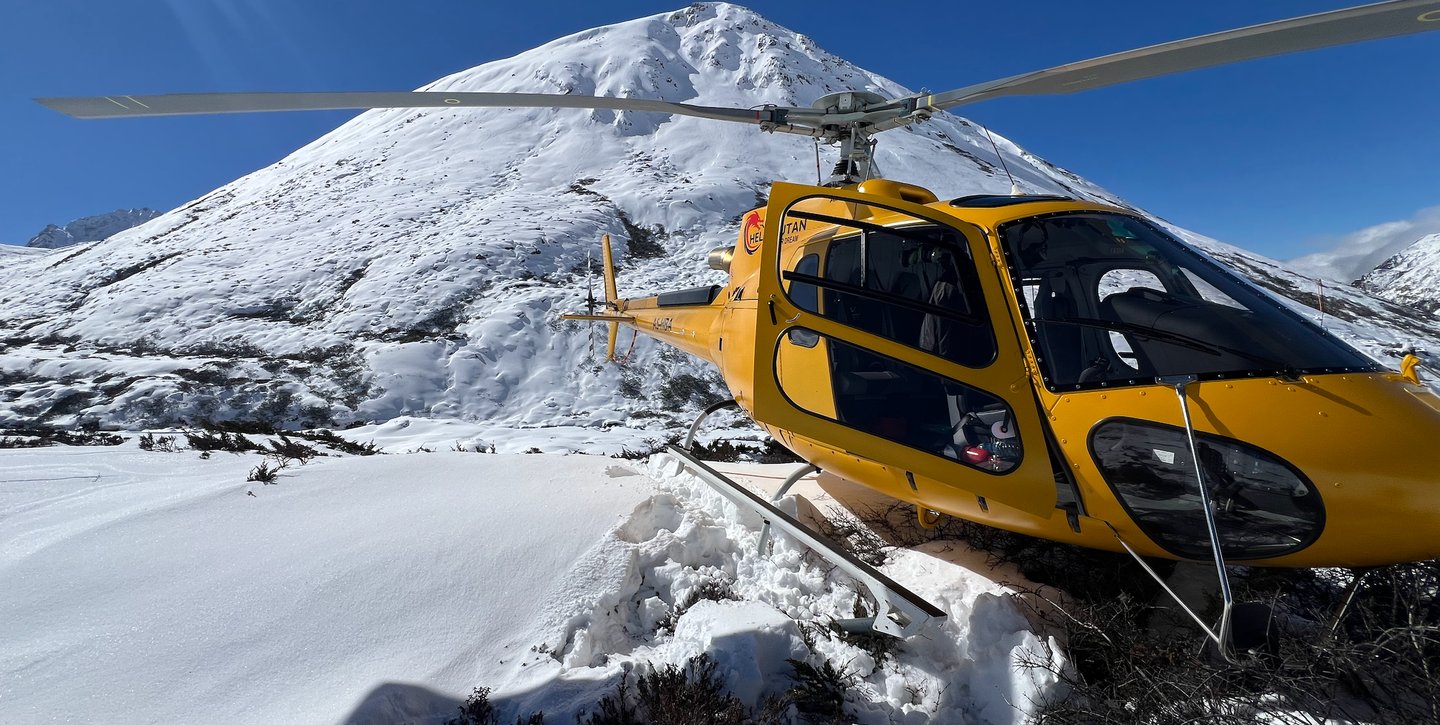
A rare landing in the high Himalayas east of Lunana, where snow-covered landscapes stretch beyond 16,000 feet. Here, Captain Edoardo Cuaz drops local collectors in search of cordyceps, one of Bhutan’s most valuable natural treasures, in regions accessible only by air.
There are places in the world that can be visited, and then there are places that can only truly be understood from above.
For Edoardo Cuaz, Bhutan is one of those rare landscapes. Having flown across ten countries, from the dramatic terrain of Everest Base Camp to the vast openness of Mongolia and the rugged mountains of Himachal Pradesh, his perspective is shaped by some of the most extreme environments on earth. Yet Bhutan, he explains, stands apart. Unlike its neighboring Himalayan regions, Bhutan remains largely untouched. Vast stretches of the north, near the Tibetan plateau, are still unpopulated, where only a few nomadic communities move across high-altitude landscapes that rise beyond 4,000 meters. Even in late April, snow lingers across these remote elevations, creating a striking contrast between forested valleys and frozen plateaus.
From the air, this sense of isolation becomes even more profound. Endless ridgelines, untouched forests, and sacred sites emerge in quiet succession. Prayer flags move gently across mountain passes, temples appear in places that seem almost unreachable, and the landscape unfolds without interruption. Flying here is not without its challenges. Bhutan’s terrain demands precision and experience, particularly at high altitudes. Yet with the capabilities of modern aircrafts such as the Eurocopter H125 helicopter, these remote regions become accessible in a way few will ever experience. It is this rare access that transforms a journey into something far more intimate and unforgettable.
What makes Bhutan truly exceptional, however, is not only its geography. It is the feeling of being somewhere deeply preserved. While infrastructure in the mountains is thoughtfully developed, many remote areas still rely on helicopters for essential access, reinforcing just how unique and untouched these regions remain. For visitors, this translates into something increasingly rare in today’s world: space, silence, and a sense of complete sensory immersion. Bhutan is not simply a destination, but an experience designed for those who seek beauty, culture, and a profound sense of disconnection from the ordinary.
Beyond the cockpit, life in Bhutan reflects this same quiet purity. Edoardo speaks of a lifestyle defined by simplicity and quality, where fresh, organic food is readily available and daily life feels deeply grounded. As a vegetarian, he finds an abundance of local options, with dishes such as kewa datshi and seasonal produce becoming part of a natural rhythm. There is also a remarkable sense of safety and trust, where everyday life moves at a slower, more peaceful pace. It is this combination of untouched landscapes, cultural depth, and quiet luxury that makes Bhutan unlike anywhere else he has flown. And perhaps this is why some journeys are best experienced not from the road, but from the sky.